



- Sku: WP3363394
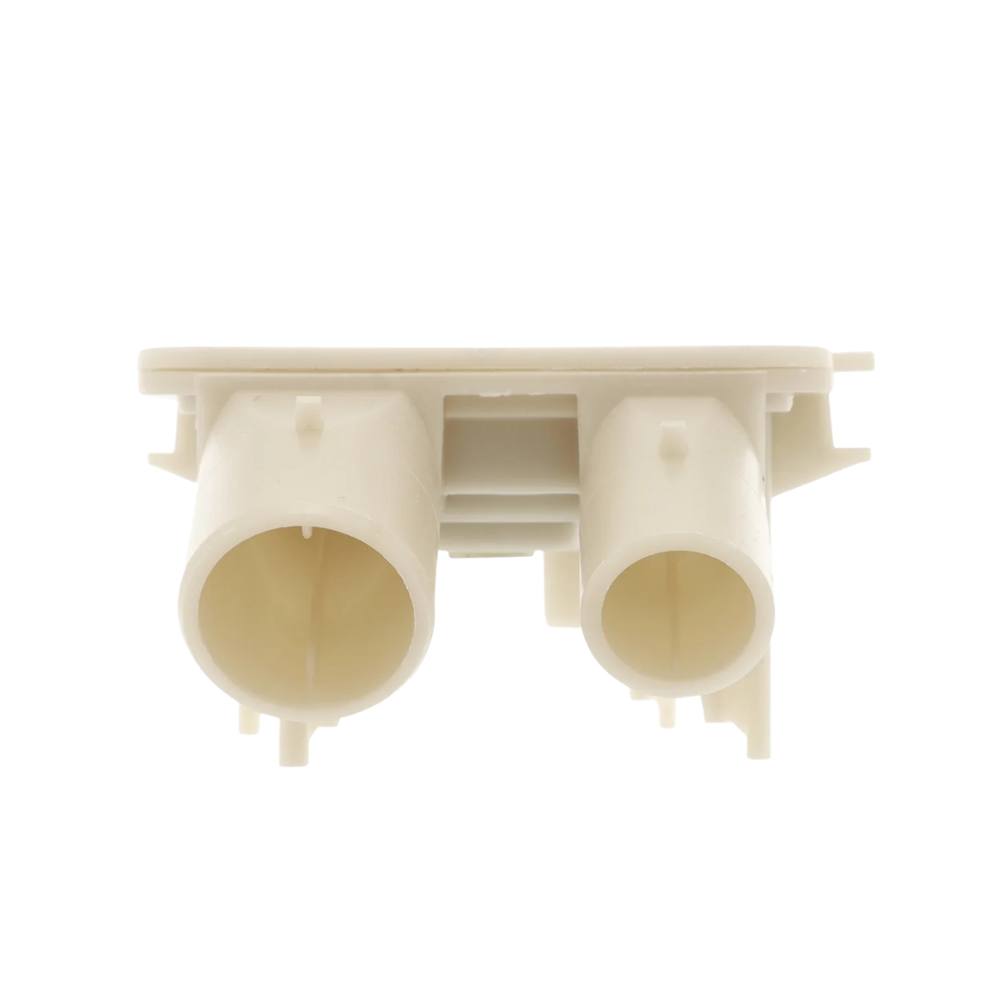
WP3363394 Washer Genuine OEM Drain Pump
FREE SHIPPING TO ALL 48 CONTIGUOUS STATES
Free standard shipping at checkout.
CHECK YOUR MODEL COMPATIBILITY
Enter your appliance model number to check if this part is listed as compatible.
Need help finding your model number?
WP3363394 Washer Direct Drive Drain Pump — Genuine OEM
Product Description
When a Whirlpool direct-drive top-load washer stops draining, the pump is a likely suspect — but it is not always the pump. Before ordering a replacement, run through a quick diagnostic sequence to avoid replacing a part that is not actually failed. First, check the drain hose. Disconnect it from the standpipe or laundry sink and look through it. Lint buildup, coins, buttons, and small clothing items (socks, baby socks, washcloths) commonly lodge in the hose between the pump outlet and the drain destination. A blocked hose produces the same no-drain symptom as a dead pump, and clearing it costs nothing.
If the hose is clear, check the lid switch. On many direct-drive Whirlpool washers, the machine will not enter the drain and spin portion of the cycle unless the lid switch detects a closed lid. A failed lid switch can make the washer fill and agitate normally but never drain or spin — a symptom that looks like a pump failure but has nothing to do with the pump. Next, tip the washer back and inspect the pump itself. Look for water stains or mineral residue around the pump housing seam — this indicates a housing crack and a slow leak. Try spinning the pump impeller by hand. If it is frozen, grinds, or catches, a foreign object is jammed inside. If it spins freely and the housing is not cracked, the pump may not be the problem — consider the motor coupler (285753A) and the motor itself before condemning the pump.
Quick Answer
Is It the Pump, the Hose, the Lid Switch, or the Motor Coupler?
A washer that won't drain can point to several causes. If water sits in the tub after the cycle and the washer never attempts to spin, check the lid switch first — a failed switch prevents drain and spin entirely. If the washer hums during drain but water doesn't move, the pump may be jammed or the drain hose may be clogged. Tip the washer back and try turning the pump impeller by hand — if it won't spin, a foreign object is likely lodged inside and the pump needs replacement. If the impeller spins freely, disconnect and inspect the drain hose for blockages. If the washer won't agitate or drain, the motor coupler (285753A) may be broken. The WP3363394 is the correct replacement only when you've confirmed the pump itself is cracked, jammed, or leaking.
Common Symptoms
- Washer won't drain — standing water remains in the tub after the cycle
- Water leaks from underneath the washer during drain or spin cycles
- Humming noise during drain cycle but water does not move
- Washer fills and agitates but never enters drain and spin
- Slow drain — tub takes much longer than normal to empty
Replaces Part Numbers
The WP3363394 is the current Whirlpool part number for the direct-drive drain pump used on beltless top-load washers. It replaces earlier revisions and cross-reference catalog numbers from multiple suppliers.
Compatibility & Model Cross Reference
This genuine OEM drain pump fits select Whirlpool-manufactured direct-drive top-load washers and washer-dryer combos. Confirm your model number before ordering.
Whirlpool: LSQ8243HQ0, LSQ9564JQ0, LSR8444LQ0, WTW5540SQ0, SAWS800MQ0, LXR9245EQ0
Kenmore: 11081350100, 11024812200, 11024952300, 11020936993
KitchenAid / Maytag: Select direct-drive top-load washer models
Roper / Estate: Select direct-drive top-load washer models
Admiral / Amana / Crosley / Inglis / Norge: Select direct-drive top-load washer models
This is a partial list of sample models. Kenmore washers with a 110-prefix model number are built by Whirlpool and use this same pump. This pump fits beltless direct-drive washers only — not belt-driven models. Always verify your full model number before ordering.
Key Features
- Genuine OEM Whirlpool direct-drive drain pump — mounts directly to the motor, no belt
- Two-port design: 1-3/4" large tub intake and 1-1/4" smaller drain outlet
- Retained by two spring clips on the motor shaft (clip part WP8546127)
- Fits the Whirlpool direct-drive top-load washer platform manufactured since 1982
- Compatible across Whirlpool, Kenmore, KitchenAid, Maytag, Roper, Estate, Admiral, Amana, Crosley, Inglis, and Norge
- Off-white plastic housing — no external electrical connections required
Product Specifications
| Part Number | WP3363394 |
| Condition | New |
| Brand | Whirlpool |
| Part Type | Direct Drive Drain Pump |
| Appliance Type | Top Load Washer, Washer Dryer Combo |
| Material | Plastic |
| Color | Off-White |
| Dimensions | 6-1/2" L × 3" W × 5-1/4" H |
| Intake Port | 1-3/4" diameter (tub connection) |
| Outlet Port | 1-1/4" diameter (drain hose connection) |
| Mounting | Two spring clips to motor shaft |
| Country of Origin | USA |
Installation & Safety Notes
Unplug the washer before servicing. Tip the washer back carefully against a sturdy support to access the pump from underneath. Have towels and a shallow pan ready — residual water will drain from the pump and hoses when disconnected. Before installing the new pump, check the drain hoses for obstructions (coins, lint, small clothing items) and inspect the motor shaft for rust. A corroded motor shaft from a prior pump leak will prevent the new pump seal from seating properly. Clean the shaft with fine emery cloth or sandpaper until smooth before pressing on the new pump.
Frequently Asked Questions
- How do I tell a pump leak from a hose leak?
- Location and timing tell you the difference. A pump leak typically appears as water dripping directly from the pump body — look for water stains or mineral deposits around the seam where the two halves of the pump housing meet. A hose leak appears at the hose clamp connections on either port of the pump, or along the drain hose itself. A pump body leak usually gets worse over time as the housing crack grows. A hose connection leak is often caused by a loose clamp or a cracked hose end and can sometimes be fixed by repositioning or replacing the clamp without replacing the pump.
- The washer hums during drain but water doesn't move — is the pump locked up?
- A humming noise during drain indicates the motor is trying to drive the pump, but the impeller is not turning. The most common cause is a foreign object — a coin, a button, a hair clip, or a fabric fragment — lodged between the impeller and the volute housing. Tip the washer back, remove the pump, and inspect the impeller chamber. If you find and remove the obstruction and the impeller spins freely again, the pump may still be usable. However, if the impeller blades are chipped or cracked from the obstruction, or the housing is damaged, replace the pump.
- Should I replace the motor coupler (285753A) at the same time?
- The motor coupler is a wear part that connects the motor to the transmission and also drives the pump. If you are already tipping the washer back to access the pump, inspecting the coupler takes only a moment. Look at the two plastic drive forks and the rubber isolator between them. If the rubber is cracked, missing chunks, or the drive forks are worn or broken, replace the coupler while you have access. A failing coupler can cause intermittent agitation failure, difficulty draining, or a grinding noise during agitation — symptoms that sometimes overlap with pump problems.
- My washer fills and agitates but won't drain or spin — is that the pump?
- Not necessarily. On many Whirlpool direct-drive washers, the lid switch must detect a closed lid before the machine will enter the drain and spin portion of the cycle. If the lid switch has failed, the washer will fill and agitate normally (some models allow agitation with the lid open) but will never drain or spin. Test the lid switch first — press the lid switch plunger manually and listen for a click. If there is no click, or the switch clicks but the washer still won't advance to drain, the switch may need replacement. Only if the lid switch is functioning and the washer still won't drain should you investigate the pump.
- Can I drain the tub manually before removing the pump?
- Yes. The easiest method is to disconnect the drain hose from the standpipe or laundry sink and lower it into a bucket or shallow pan below the tub level. Gravity will drain the water through the hose. If the hose or pump is clogged and gravity drainage is too slow, attach a wet/dry shop vacuum to the end of the drain hose and vacuum the water out. This saves you from getting soaked when you disconnect the pump hoses with a full tub of water still in the machine.
Have a question?



WP3363394 Washer Genuine OEM Drain Pump